Whether it's a car battery under the hood or a deep-cycle unit in a home UPS bank, a swollen case is one of the clearest signs something has gone wrong internally. The usual cause is overcharging — and it's more common, and more preventable, than most people realize.
What Overcharging Actually Does Inside a Battery
A battery is designed to accept charge up to a specific voltage and current. Push past that — through a faulty regulator, a mismatched charger, or a charging system that never properly cuts off — and the excess energy has to go somewhere. Inside a lead-acid battery, that means the electrolyte begins breaking down through electrolysis faster than it should, releasing hydrogen and oxygen gas inside a sealed cell that isn't built to vent that much, that fast.
Why the Case Swells
That gas buildup has nowhere to go. Pressure inside the cells rises, and the battery's plastic casing — usually polypropylene or ABS — starts to bulge outward under the strain. It's the same principle as a sealed container heating up: something has to give, and in a battery, that's usually the case walls flexing outward before a seal or vent gives way. Heat makes this worse, which is part of why swelling shows up more often after a battery has spent time in direct engine-bay heat or a poorly ventilated UPS room.
Common Causes of Overcharging
Faulty voltage regulator
A car's alternator regulator that's stuck feeding constant high voltage overcharges the battery every time the engine runs.
Mismatched UPS charger
A charge controller set for the wrong voltage or battery chemistry pushes more current than the battery can safely absorb.
Continuous high-current charging
Leaving a battery on a charger that doesn't taper off once it reaches full capacity keeps stressing it long after it's done.
Heat compounding the effect
High ambient temperatures accelerate the same chemical reactions overcharging causes, making the damage happen faster.
Warning Signs to Catch It Early
- A visibly bulging or misshapen case — the clearest and most urgent sign.
- The battery feels hot to the touch during or shortly after charging.
- A sulfur or rotten-egg smell near the battery, a sign of gas venting.
- Needing to top up water far more often than usual, in batteries that use it.
- Reduced capacity despite the battery being relatively new.

Is a Swollen Battery Dangerous?
Yes — treat it as a safety issue, not just a maintenance one. The built-up pressure means a swollen battery can leak corrosive electrolyte, and in rare cases the case can rupture. It should not be charged further, struck, punctured, or handled roughly. If you notice swelling, disconnect the battery if it's safe to do so, keep the area ventilated, avoid open flames or sparks nearby, and have it inspected and replaced rather than attempting a fix yourself.
What to Do If You Notice a Swollen Battery
Stop charging it immediately and avoid running the engine or inverter off it if possible.
Ventilate the area — open a garage door or windows if it's indoors.
Avoid sparks, flames, or smoking nearby, since a stressed battery can vent flammable hydrogen gas.
Get it inspected and replaced — a swollen case means permanent internal damage, not something that can be reversed.
How to Prevent Overcharging
- Get your alternator and voltage regulator checked periodically, especially if you notice repeated swelling or short battery life.
- Match your UPS charger to your battery's chemistry and voltage exactly — never assume "close enough" is safe.
- Don't leave batteries on a non-smart charger indefinitely — a charger without automatic cutoff keeps pushing current past full capacity.
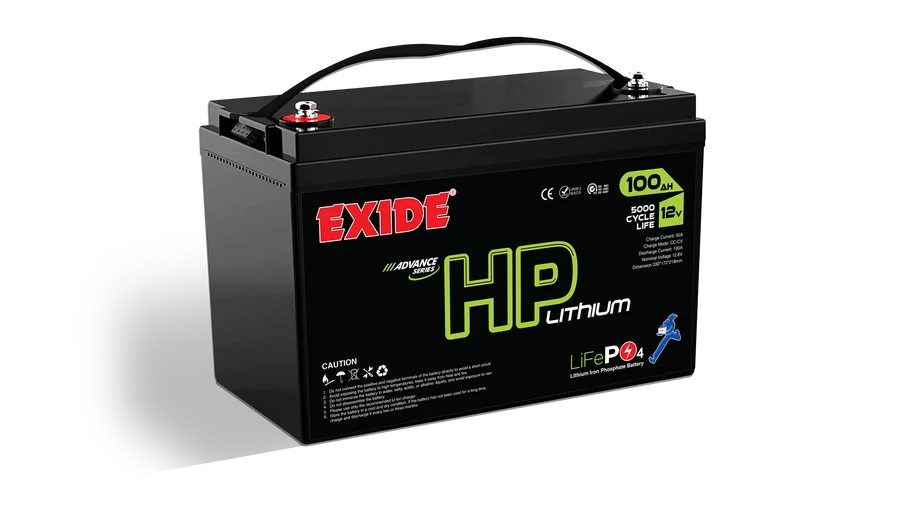
- Consider a battery with a built-in Battery Management System (BMS) for UPS and solar setups — lithium options like Exide's HP Lithium range include smart BMS protection that cuts charging automatically once full.
- Keep batteries in a cool, ventilated location — heat accelerates the same reactions that overcharging causes.
Frequently Asked Questions
Is a swollen car battery dangerous?
Yes. A swollen battery has built up internal pressure and can leak corrosive electrolyte or, in rare cases, rupture. It should be handled carefully and replaced rather than used further.
Can a swollen battery be fixed?
No. Once a battery's case has swollen, the internal damage is permanent and it should be replaced rather than recharged or repaired.
What causes a UPS battery to overcharge?
A faulty charge controller, an incorrectly configured charging voltage, or leaving a battery on continuous high-current charge past full capacity are the most common causes.
Think your battery might be overcharging?
Call or WhatsApp us at +92 321 6509001 — we're at 367-F1 Samsani Road, Johar Town, Lahore.